

Search
Search Results
Employment Relations in a Changing World Economy
By collaborating, the contributors seek to clarify the dynamics of employment relations across the world today, and to set the terms of reference for a new generation of international-comparative employment research.
Read More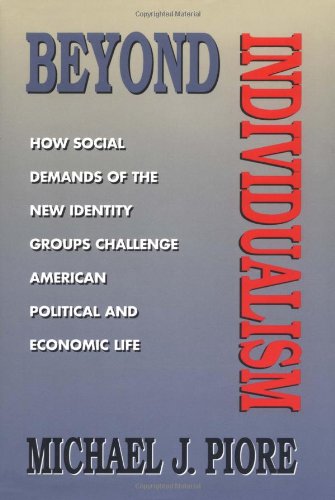
Beyond Individualism
This book takes up the urgent question of how, in a time of economic crisis and constraint, we can meet the pent-up demand for spending on our nation’s neglected poor, infirm, and disadvantaged, old and young.
Read MoreThe Mutual Gains Enterprise
The Mutual Gains Enterprise is an urgent and compelling call for workplace reform, showing how American business can indeed attain world-class, sustainable competitive advantage – in addition to securing more rewarding employment for workers.
Read MoreMade In America: Regaining the Productive Edge
Based on interviews with hundreds of workers, this vivid portrait not only identifies weaknesses and problems in management and productivity, but offers workable solutions for making American business work well again.
Read MoreBrazil’s Role in the Biopharmaceutical Global Value Chain
Brazil’s biopharmaceutical market has experienced dramatic changes since 2000, with improvements in the performance of local firms, as well as an expansion in consumer demand and productive capacity, which have made the country the sixth largest market in the world.
Read MoreThe University as an Engine of Innovation: Critical Case Studies from Brazil and the U.S.
The university’s role now
extends well beyond just research and education to more applied and translational work with
industry as well as more entrepreneurial activities that support new venture formations among
students and faculty.
Exploring the Risks of Value Chain Modularity: Electronics Outsourcing During the Industry Cycle of 1992-2002
This paper focuses mainly on the issues of supply-base concentration and increased buyer-supplier lock-in through an examination of recent trends in what is perhaps the best case of value chain modularity, product-level electronics.
Read MoreDiffusion of Academic R&D Capabilities as an Industrial Innovation Policy? – The Development of Israel’s IT Industry
This paper focuses on the Israeli case and argues that unlike India and Ireland, Israel’s competitive advantage in the IT industries, is in Research and Development (R&D).
Read MoreThe 2010 National Organizations Survey: Examining the Relationships Between Job Quality and the Domestic and International Sourcing of Business Functions by United States Organizations
This paper presents the results from the 2010 National Organizations Survey (NOS). The survey is
representative of U.S. full-time jobs.
Services Offshoring Working Group Final Report
Although the scale of services offshoring has likely been modest so far, it will inevitably grow and stimulate changes in the United States economy — both positive and negative — through the relocation of work and the internationalization of innovative activities.
Read More